There's a spreadsheet somewhere in your business right now that everyone is slightly afraid of. It has 14 tabs, colour coding only one person understands, and a formula that broke in March and got patched by hand ever since. Orders live in it, or quotes, or stock, or staff schedules. It gets emailed around as "Master_Tracker_FINAL_v7_USE_THIS_ONE.xlsx", and the truth of your business depends on which copy you're looking at. Around it sits a halo of WhatsApp threads where the real coordination happens, unsearchable and unaccountable.
I'm not here to mock the spreadsheet. It got you this far, and for a five-person team it was the right tool. But somewhere between 10 and 100 staff, most UAE SMEs cross a line where the spreadsheet stops being free and starts quietly billing you every month, in hours, errors, and risk. This post is about recognising that line, what a purpose-built internal tool looks like on the other side of it, and the rough AED math for whether replacing the chaos pays for itself. At the volumes I usually see, it does, faster than most owners expect.
The five signs you've outgrown the spreadsheet
You don't need a consultant for this diagnosis. If two or more sound familiar, you've crossed the line.
Version chaos. Multiple copies in circulation, and decisions get made off stale data. Someone quotes a client from Tuesday's file while the real numbers changed Wednesday. Shared cloud sheets help, until three people edit the same row and nobody notices.
Broken formulas nobody dares touch. The sheet has grown organically for years. One deleted row, one dragged cell, and a total that dozens of decisions rely on is silently wrong. Studies have suggested a large share of complex spreadsheets contain at least one material error; whatever the exact figure, every owner I've asked has a horror story.
No permissions. Everyone who can see the sheet can see all of it, and edit all of it. Your junior coordinator can view margins. A departing employee can walk out with your entire client list in one download. Try explaining that setup to an auditor or a serious buyer during due diligence.
No audit trail. A number changed. Who changed it, when, and from what? The answer to "why did we give this client 15% off" lives in a chat thread on someone's personal phone, if it lives anywhere.
Key-person risk. One person understands how the whole thing hangs together. When they're on leave, work slows. If they resign, you're in real trouble. That's not a spreadsheet problem anymore, it's business continuity.
What the chaos actually costs, in AED
Owners tolerate spreadsheet grind because it feels free. The software costs nothing extra, so the pain reads as "just how we work". Let's put rough numbers on it instead: hours spent × a blended fully-loaded staff cost of around AED 80 per hour. Illustrative, not gospel, adjust to your payroll.
Take a 30-person trading or services business. Typical spreadsheet tax:
- Re-keying and reconciling data between the sheet, accounting, and WhatsApp: maybe 25 hours a month, roughly AED 2,000
- Chasing the current version, fixing conflicts, rebuilding broken tabs: 10 hours, AED 800
- Answering "what's the status of X" questions that a shared screen would answer: 15 hours, AED 1,200
- Producing management numbers by hand each month: 10 hours, AED 800
That's around AED 4,800 a month, or AED 57,000 a year, before you count a single error. And errors are where it gets expensive. One mispriced quote on a large job, one duplicate payment, one stockout because the inventory tab was three days stale, and you burn a month's worth of that figure in an afternoon. The labour is the visible cost; the mistakes are the iceberg underneath.
What a purpose-built internal tool actually looks like
"Internal tool" sounds grander than it is. In practice it's a small web app, built for exactly your workflow, that your team uses through a browser on any laptop or phone. No installs, no per-seat SaaS licence that punishes you for growing. For UAE SMEs it usually takes one of three shapes.
The admin dashboard
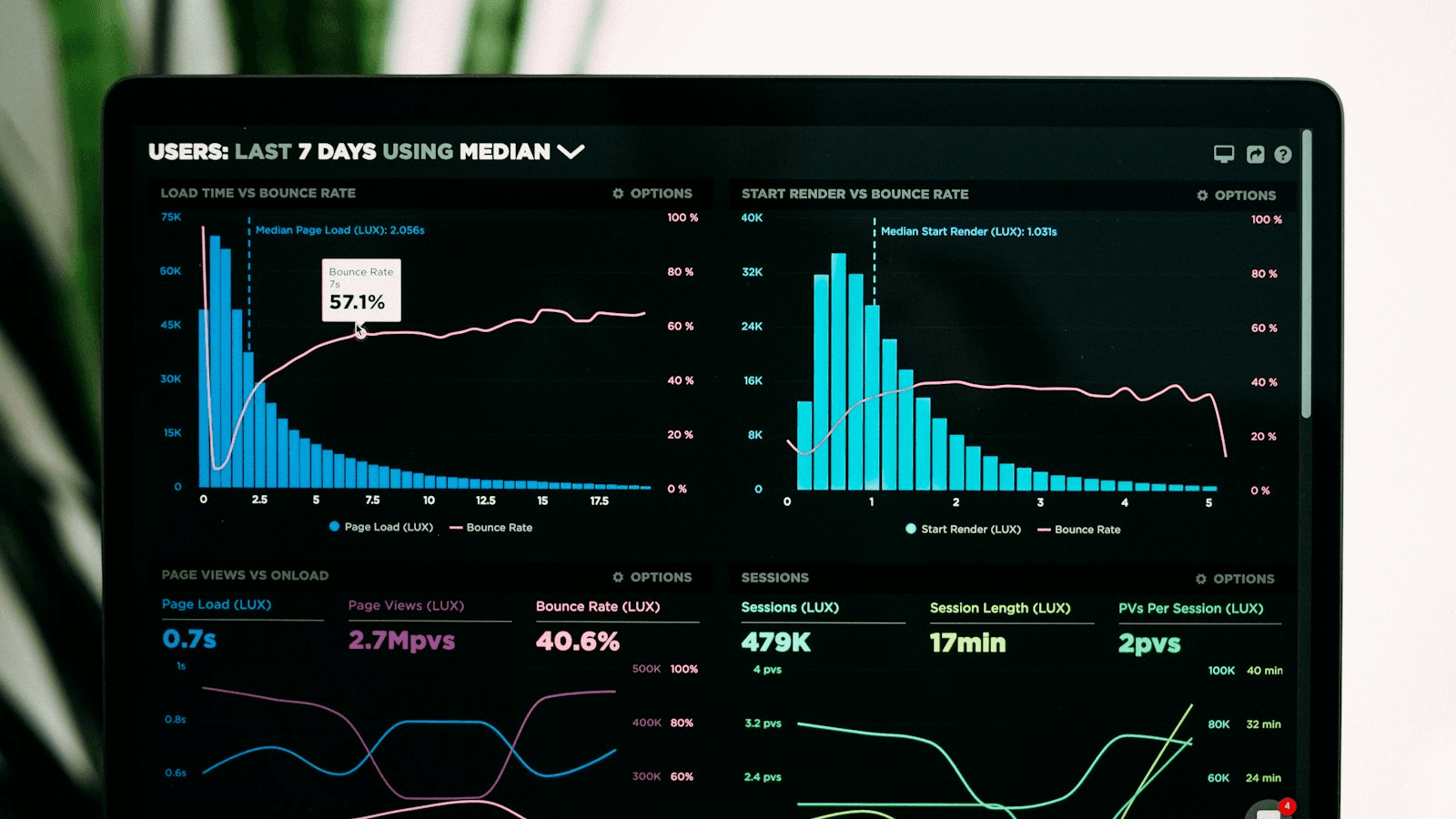
One screen that shows the true state of the business: open orders, pending payments, stock levels, team workload. Everyone looks at the same live data, so "which version" stops being a question. Role-based permissions mean the coordinator sees jobs, the accountant sees payments, and margins stay with the people who should see margins.
The quoting app
Your pricing logic moves out of a fragile formula and into software, with guardrails. Staff pick the options, the tool calculates the price, applies approved discount limits, and generates a clean PDF in your branding. Quotes go out in minutes instead of hours, and nobody can fat-finger a decimal into a loss-making job. Every quote is logged: who created it, what was priced, what was won.
The ops tracker
The workflow itself, jobs, shipments, projects, moving through defined stages, with each handoff recorded. Instead of "did anyone follow up on the Sharjah delivery" echoing through a group chat, the tracker shows the status, the owner, and the history. New staff learn the process from the tool rather than from six months of shadowing your one indispensable employee. That's the key-person risk retired.
None of these are big builds. A focused first version of any of them typically ships in weeks. And because the data now lives in a real system instead of cells, you can later bolt on workflow automation, automatic payment reminders, status notifications, monthly reports that write themselves, without rebuilding anything. The spreadsheet was a dead end; the internal tool is a foundation.
The ROI math, worked end to end
Back to our 30-person example, carrying roughly AED 4,800 a month of spreadsheet tax. Say a scoped internal tool, a quoting app with a simple ops dashboard, costs somewhere in the tens of thousands of dirhams to build, plus a modest monthly hosting figure. I'm keeping the build number rough because scope drives it more than anything; the shape of the math is what matters.
If the tool eliminates even 70% of that grind, you're recovering around AED 3,400 a month in labour alone. Against a build in that range, straight payback lands somewhere around 12 to 18 months on hours saved, and that's the pessimistic view. Add one avoided pricing error a quarter, or same-day quotes winning a couple of extra jobs a year, and payback compresses to months. In my experience those benefits end up worth more than the hours, they're just harder to see in advance.
Two honest caveats. First, if your spreadsheet tax is small, a lightly used sheet a few hours a month, the math doesn't work and you shouldn't build. Second, the tool only pays back if the team actually uses it, so the first version should be smaller than you think and shaped around how work already flows.
Why the spreadsheet keeps winning anyway
If the math is this clear, why do so many businesses in Dubai, Sharjah, and the free zones keep limping along on Excel? Three reasons, all fixable.
The cost is invisible. Nobody gets an invoice for spreadsheet hours, so the grind never shows up in a P&L line. Run the two-week time log, make the cost visible, and the conversation changes.
The last software project went badly. Plenty of SMEs have paid for a system that arrived late, bloated, and unused. The fix is scope discipline: build the smallest tool that kills the worst pain, prove it, then extend. Our complete guide to web app development in Dubai covers how to run that process and what to demand from a partner.
And the person who owns the spreadsheet resists. Understandably, it's their institutional power. Involve them early, make them the tool's first champion, and that resistance usually flips into the strongest advocacy you'll get.
A composite example: a distribution business in a Sharjah free zone, about 40 staff, ran orders and stock across two master sheets and four WhatsApp groups. Their quoting sheet had a margin formula that had been wrong for an unknown number of months. A first-version quoting app and stock dashboard went live in about six weeks. Within a quarter, quote turnaround had dropped from days to hours, the month-end reporting scramble was gone, and the owner reckoned the pricing fix alone had covered the build. Nothing clever happened. The data just moved from cells into a system with rules.
Frequently Asked Questions
How do I know if my business is ready for an internal tool?
Run a two-week time log on everything touching your main spreadsheet: updating it, reconciling it, answering questions it should answer. If the total crosses roughly 40 to 50 hours a month, or a single sheet error has ever cost you real money, the math is worth running properly. Below that, tidy your existing setup and revisit in a year.
Why not just use Google Sheets with better discipline, or a no-code tool?
Discipline decays; software rules don't. Shared sheets still lack real permissions, audit trails, and workflow logic, so the failure modes remain. No-code platforms are a legitimate middle step for simple cases, but they get expensive per seat and rigid as your process evolves. Custom earns its keep when the workflow is genuinely yours.
What does an internal tool roughly cost for a UAE SME?
It depends almost entirely on scope, which is why I'd distrust anyone quoting a number before understanding your workflow. A focused first version, one core workflow done well, typically lands in the tens of thousands of dirhams with a modest monthly running cost. The right move is to model it against your own spreadsheet tax, not against a generic price list.
Will my team actually stop using the spreadsheet?
They will if the tool is faster than the sheet for their daily task, and they won't if it isn't. That's a design problem, not a willpower problem. Build the first version around the two or three actions staff do most, involve the current spreadsheet owner from day one, and retire the old sheet formally once the tool is live so there's no shadow copy limping on.
If there's a spreadsheet in your business that fits this description, the useful first step is cheap: log the hours for two weeks and see what the chaos actually costs. If the number surprises you, our web app development team builds exactly these internal tools for UAE SMEs, scoped small, shipped in weeks, and designed around how your team already works. Write to team@ins.ae or call +971 58 995 4553, bring the messiest sheet you've got, and we'll run the ROI math with you before anyone talks about building.